
TAOIST PHILOSOPHY · 道家哲学

“Today I Lost My Self” (Wu Sang Wo) in Zhuangzi: Nanguo Ziqi’s Armrest Meditation, Seasoned Wood, Cooled Ashes & the True Self 《庄子·齐物论》开篇“吾丧我”详解:形如槁木、心如死灰与“真吾”显露

Why the opening line of Zhuangzi’s Qiwu Lun uses two different Chinese words for “I” (“Wu” 吾 and “Wo” 我)—and why “body like dry wood and heart like dead ashes” describes living clarity rather than numbness.

A still mountain pool ringed by mossy rocks, ferns and pines, reflecting the sky.

Every great philosophical chapter in Chapter 2 of the Zhuangzi—Qiwu Lun (《庄子·内篇·齐物论》), including The Piping of Heaven (Tianlai), Three in the Morning (Zhaosan Musi), and Zhuang Zhou’s Butterfly Dream—springs from a single quiet scene at the very beginning of the text. The master Nanguo Ziqi (南郭子綦) is sitting by his low curved wooden armrest, exhaling a long, gentle breath toward the sky, and utters a three-character sentence that has fascinated thinkers for over two millennia: “Wu sang wo” (吾丧我, “Today I have lost my self”).

1. The Opening Dialogue of Zhuangzi: Qiwu Lun (《齐物论》)

Nanguo Ziqi sat leaning on his armrest (隐机而坐, yinji er zuo). Looking up toward Heaven, he breathed out gently (仰天而嘘)—serenely detached, as though he had lost his counterpart (荅焉似丧其耦).

Yancheng Ziyou, who was standing in attendance before him, asked: “What is this? Can the body truly be made to be like dry wood (形固可使如槁木), and can the heart-mind truly be made to be like dead ashes (而心固可使如死灰乎)? The one leaning on the armrest now is not the one who leaned on the armrest yesterday!”

Ziqi replied: “Yan, how good that you ask this question! Just now, I lost my self—do you understand that (今者吾丧我,汝知之乎)? You have heard the piping of humanity, but you have not yet heard the piping of Earth; or even if you have heard the piping of Earth, you have not yet heard the piping of Heaven!”

2. Why Does Classical Chinese Use Two Different Words—“Wu” (吾) and “Wo” (我)?

In English or French, translating “Jin zhe wu sang wo” (今者吾丧我) as “Today I lost myself” hides the grammatical brilliance of Zhuangzi’s sentence. In pre-Qin classical Chinese, Wu (吾) and Wo (我) carry a subtle yet decisive distinction:

  • Wo (我 — The Grasping, Oppositional Ego): Notice that the character 我 is anciently graphic of a hand gripping a serrated halberd, and Ziqi describes losing it as “losing his counterpart” (丧其耦, sang qi ou). Wo is the defensive, comparative “me” that constantly sets itself up against an “other” (Bi 彼)—my reputation vs. yours, my opinion vs. yours (Honour, Disgrace, and the Self).
  • Wu (吾 — The Unclouded True Awareness): When the defensive armor of Wo drops away during Ziqi’s long exhalation (“仰天而嘘”), the person does not vanish into unconsciousness! Instead, the deeper, unconditioned subject—Wu (吾, the authentic self that breathes with Heaven and Earth)—wakes up clearly.
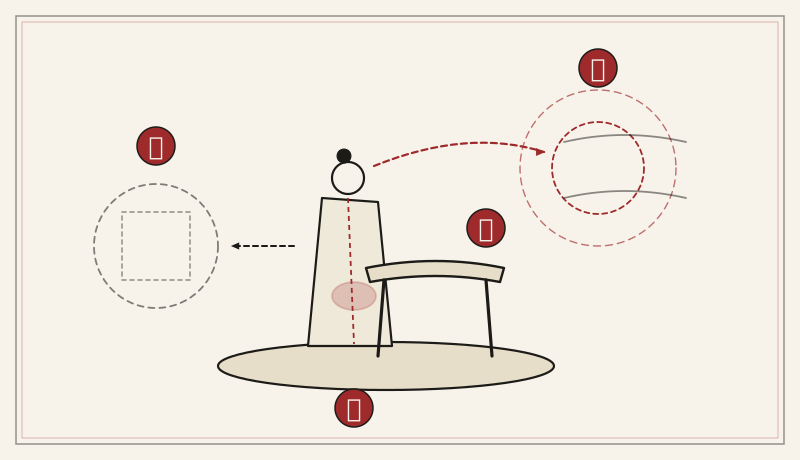
Classical ink-and-cinnabar diagram of Nanguo Ziqi's Wu Sang Wo meditation at the opening of Zhuangzi's Qiwu Lun, showing the curved wooden armrest, the shedding of the oppositional ego shell on the left, the settled body and heart in the center, and the open resonance with Heaven on the right

Four Dimensions of Nanguo Ziqi’s Armrest Meditation (《庄子·齐物论》“今者吾丧我”四维图解).

  1. Leaning on the Armrest & Exhaling Gently (隐机而坐 · 仰天而嘘): releasing physical bracing and stale breath so the posture settles naturally
  2. Shedding the Oppositional Ego — “Losing Wo” (丧我 · 似丧其耦): letting go of the combative “me-versus-you” shell (the person inside the boat)
  3. Body Like Seasoned Wood, Heart Like Cooled Ashes (形如槁木 · 心如死灰): the limbs stop fidgeting for show and the heart-mind stops flaring with reactive sparks
  4. The True Self Awakens to the Piping of Heaven (真吾显露 · 闻乎天籁): once the ego-noise quiets (Xinzhai & Zuowang), the whole symphony of nature becomes audible

3. Why “Dry Wood and Cooled Ashes” Does Not Mean Lifeless Numbness

Beginners sometimes worry that “body like dry wood, heart like dead ashes” (形如槁木,心如死灰) sounds cold or depressed. In Taoist meditation and the Qingjing Jing, the image means the exact opposite of apathy:

  • Seasoned Wood (槁木): Green wood warps and twists with every change in weather; seasoned wood is structurally tranquil, free of restless twitching (just like Standing Post).
  • Cooled Ashes (死灰): Blazing embers flare up whenever a gust of flattery or insult blows past; cooled ashes cannot be reignited by petty provocation (Mirror-Like Mind).
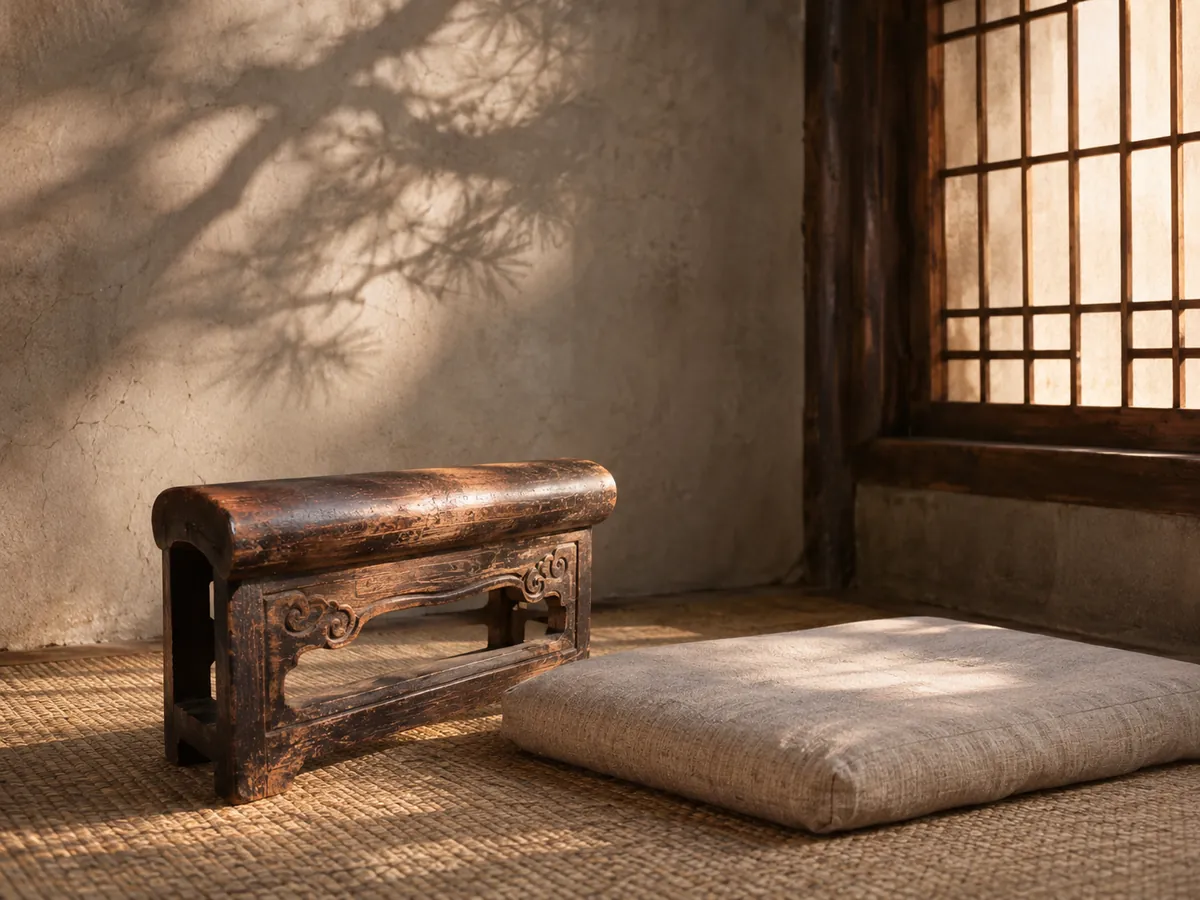
An old carved wooden armrest of dark aged wood beside a plain linen cushion on a woven straw mat in a bare room, with pine-branch shadows on a plaster wall and light through a lattice window.

Ziqi of Southern Wall leaning on his armrest (Zhuangzi Chapter 2): “Today I lost myself”—the self that grasps has fallen away.

4. Practising Quiet Sitting and Standing Between Wudang Mountain and Singapore

Connecting the contemplative heritage near Wudang Mountain’s UNESCO World Heritage ancient Taoist temples with our regular classes in Singapore, Wudang.Org guides students in both classical text study and quiet cultivation. Begin your journey on Start Here.

Seeker’s Q&A · Frequently Asked Questions

What is the difference between “Wu” (吾) and “Wo” (我) in Zhuangzi’s phrase “Wu sang wo” (吾丧我)?

In Zhuangzi’s usage, “Wo” (我) refers to the socially conditioned, oppositional ego that constantly compares itself against others, while “Wu” (吾) refers to the deeper, unclouded awareness that remains when that defensive ego is let go.


Does “body like dry wood and heart like dead ashes” (形如槁木,心如死灰) mean depression or apathy?

Not at all! In classical Taoism, it describes profound meditative stillness: the body stands or sits as steadily as seasoned timber, and the heart-mind is free of the reactive sparks of greed and anger.

How does Nanguo Ziqi’s “exhaling gently toward Heaven” (仰天而嘘) relate to Wudang Qigong and Taijiquan?

Every Wudang session begins with a long, unforced exhalation that releases chest tension and mental clutter—allowing you to step out of your busy workday ego before moving.
