TAOIST PHILOSOPHY · 道家哲学

The Usefulness of Uselessness (Wuyong zhi Yong) in Zhuangzi: The Gnarled Tree, the Footpath and Freedom from Instrumental Burnout 《庄子》“无用之用”详解:从樗树、社树与“立乎不测”看道家如何超越功利内耗

Why Zhuangzi’s parables of the gnarled Ailanthus tree, Carpenter Shi’s shrine oak, and the one-foot walking path reveal that life requires vast “unproductive” space to stay whole.

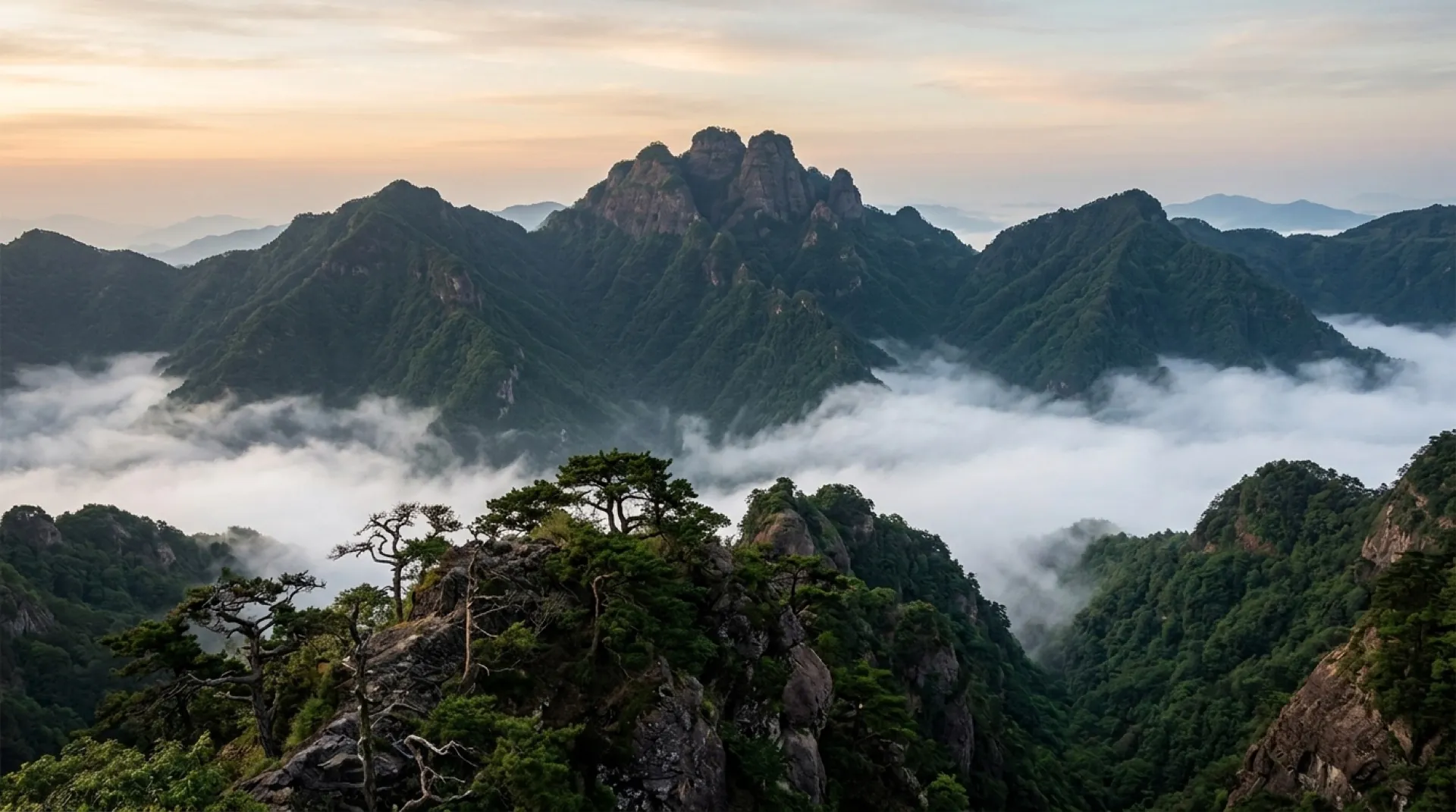
Forested rocky peaks rising above a sea of clouds at dawn.

In a culture that measures every hour by measurable output, what is the value of a thirty-minute walk with no destination, a quiet cup of tea, or twenty minutes of standing meditation? To a purely utilitarian mind, anything that cannot be sawed into timber or monetised on a spreadsheet is “useless.” Yet across Chapters 1, 4, and 26 of the Zhuangzi, the philosopher turns this assumption upside down with one of the most liberating insights in Taoist philosophy: “Everyone knows the usefulness of what is useful, yet no one knows the usefulness of what is ‘useless’” (人皆知有用之用,而莫知无用之用也, Wuyong zhi Yong).

1. Three Classical Parables in the Zhuangzi: Why Straight Trees Fall First

Zhuangzi develops the philosophy of Wuyong (无用, non-instrumental freedom) through three unforgettable conversations:

  • Huizi’s Gnarled Tree in Xiaoyao You (《庄子·内篇·逍遥游》): The logician Huizi complains to Zhuangzi that he has a huge Chu tree (樗, Ailanthus) whose trunk is so swollen and gnarled that it defies the chalk-line, and whose twigs are so twisted that they defy the carpenter’s square and compass—making it completely useless to builders. Zhuangzi replies with a smile: “Why not plant it in the village of Nothing-Whatsoever (无何有之乡), in the wide wilds of Broad-and-Boundless, and wander in non-doing (Wu Wei) by its side, or lie down at ease beneath its branches? What never falls to the axe and has nothing to harm it—how could its lack of utility ever be a trouble to it?” (Compare Xiaoyao You: Wandering at Ease.)
  • Carpenter Shi and the Shrine Oak in Renjianshi (《庄子·内篇·人间世》): A master carpenter named Shi walks past a gigantic mountain oak wide enough to shade thousands of oxen without even glancing at it, dismissing it as “worthless timber” (散木) because boats made from it would sink and pillars made from it would rot. That night the oak appears in his dream and asks: “What are you comparing me with? With fine-grained useful trees? The hawthorn, pear, orange, and pomelo have their branches broken and stripped as soon as their fruit ripens; thus their own commercial utility makes their lives bitter and cuts short their natural years… I have sought for a long time to be of no utility to the axe; now that I was nearly killed, I have finally achieved it—and for me, that is the greatest usefulness of all (为予大用)!”
  • The One-Foot Path in Waiwu (《庄子·杂篇·外物》): When Huizi challenges him again—“Your words are useless!”—Zhuangzi answers: “Only when you understand the useless can one speak with you about the useful. The earth is certainly vast and wide, yet what a person actually steps on at any moment is no more than the size of a foot. Suppose, however, you dug away all the ground right up to the edges of their feet down to the Yellow Springs—would that one foot of ground still be useful for walking?” “No, it would be unusable,” says Huizi. “Then,” concludes Zhuangzi, “the usefulness of the ‘useless’ is perfectly clear!”

2. Visualising Wuyong zhi Yong: The Tree and the Footpath

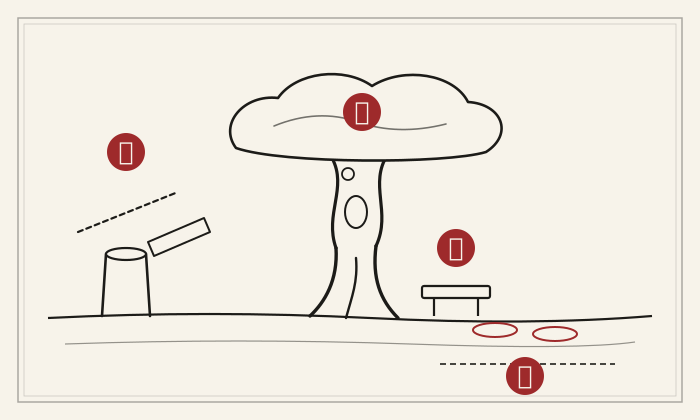
Together with Chapter 11 of the Tao Te Ching (Dao De Jing)—which shows that a clay bowl, a room, and a wheel hub derive their usefulness from their empty space (“What is present gives benefit; what is absent gives usefulness,” 有之以为利,无之以为用)—Zhuangzi’s two images can be seen in a single mountain scene:

Classical ink-and-cinnabar diagram of Zhuangzi's Usefulness of Uselessness (Wuyong zhi Yong) showing the gnarled ancient tree trunk that escapes the carpenter's axe, its vast shade canopy sheltering a quiet stone seat, the narrow footpath underfoot, and the wide untrodden mountain ground that keeps the path stable

Zhuangzi’s four-fold anatomy of “the Usefulness of Uselessness” (无用之用 · 方为大用).

  1. The Gnarled Trunk Escapes the Axe (散木不夭斤斧 · 全生保真): because the trunk refuses to be reduced to a straight commercial plank, it preserves its natural lifespan (Old Trees of Wudang)
  2. The Canopy in Nothingsville (广莫之野 · 彷徨乎无为其侧): what cannot be sawed into timber becomes a generous sanctuary of shade, rest, and quiet breath
  3. The Foot-Wide Stepping Path (容足之地 · 有用之用): our immediate tasks and livelihood occupy only a narrow strip of ground under our shoes
  4. The Vast Untrodden Earth Around the Path (侧足之域 · 无用之用): without the wide “unused” earth supporting both sides of the path, a single step would become a terrifying abyss

3. Why Modern Burnout Comes from Digging Away the “Useless” Ground

Look closely at Zhuangzi’s footpath metaphor in Chapter 26. Why do so many capable, conscientious people suddenly feel anxious, brittle, or exhausted in midlife? Because they have gradually dug away every square inch of “unproductive” ground around their feet:

  • Every walk must become a podcast productivity session; every hobby must become a side-business; every quiet evening must be filled with screens or work messages.
  • Once the surrounding earth of rest, silence, contemplation, and unhurried movement is carved away, your daily schedule becomes a one-foot-wide ledge suspended over a cliff. Even if your career skills are sharp, nobody can walk naturally or creatively on a ledge where a two-inch misstep means falling into the abyss.

In Wudang cultivation, practices such as Zuowang (Sitting and Forgetting), Xinzhai (Fasting of the Heart-Mind), Walking Qigong, and Guqin contemplation are not designed to turn you into a sharper tool for someone else’s workshop. They restore the wide, solid mountain earth around your footpath so that you can walk through daily responsibilities with a Mirror-Like Mind and genuine inner potency (De).

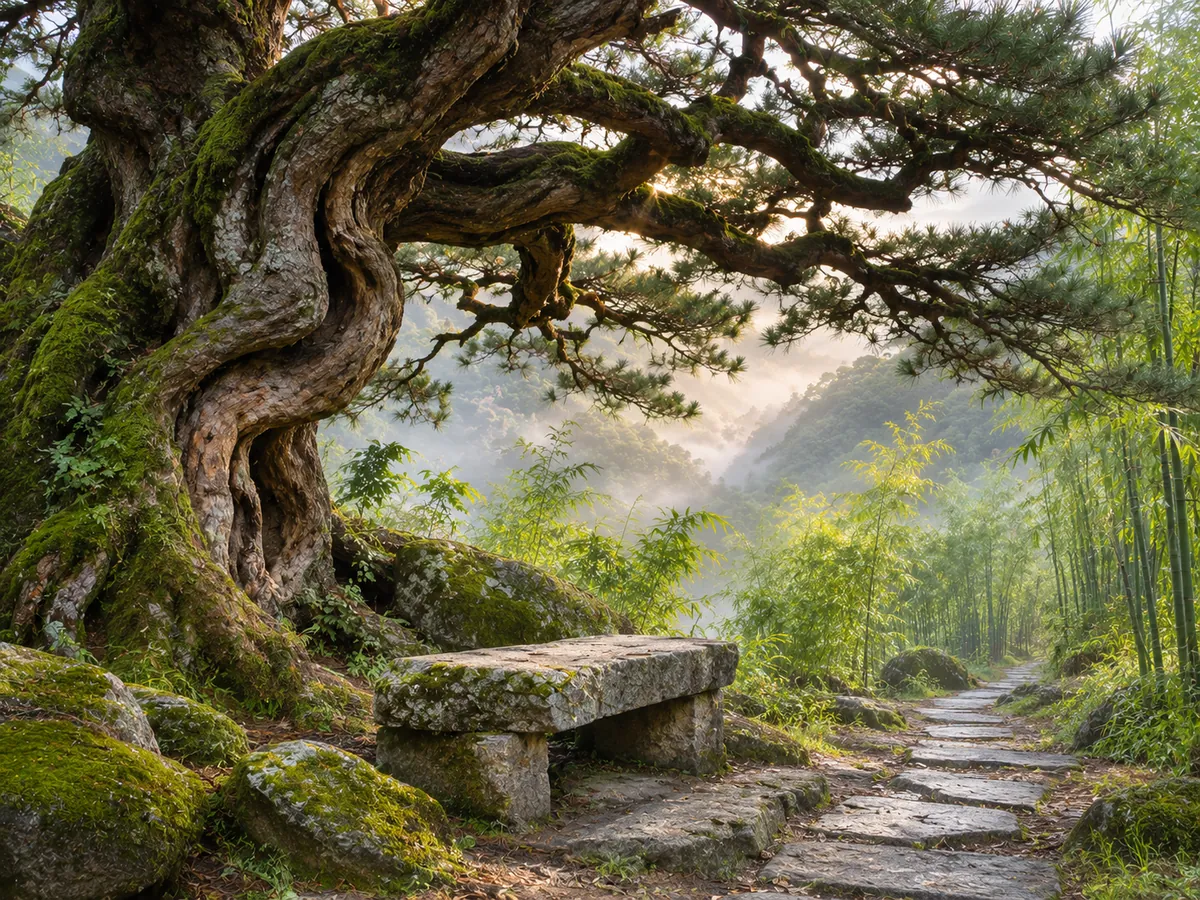
An ancient gnarled mountain tree with a twisted mossy trunk spreading its wide canopy over a quiet grey stone bench and misty flagstone path.

Zhuangzi’s Gnarled Tree in Nothingsville: what defies the carpenter’s straight chalk-line survives the axe and shelters all who rest beneath its canopy.

4. Cultivating “Nothingsville” Between Wudang Mountain and Singapore

Connecting the ancient, twisted cypresses and pines around Wudang Mountain’s UNESCO World Heritage ancient Taoist temples with our regular classes in Singapore, Wudang.Org invites you to plant a “gnarled tree in Nothingsville” right inside your weekly rhythm—twenty minutes where you do not have to prove, sell, or optimise anything. Explore our foundational pathways on Start Here.

Seeker’s Q&A · Frequently Asked Questions

What does Zhuangzi mean by “the usefulness of uselessness” (无用之用)?

Zhuangzi distinguishes narrow commercial or instrumental utility (which often exploits and exhausts living things, like straight timber felled early) from deeper existential value—the “unused” space, rest, and non-instrumental freedom that allow life to endure and flourish.


How does Zhuangzi’s “one-foot path” parable in Chapter 26 explain burnout?

Although our shoes only step on one foot of ground at a time, we can walk calmly only because the wide “unused” earth surrounds our feet. If we eliminate every non-utilitarian moment of rest, silence, and contemplation, our daily life becomes a terrifying tightrope over an abyss.

How does “the usefulness of uselessness” relate to Tao Te Ching Chapter 11?

Both point to the vital function of openness and non-instrumentation: in Tao Te Ching Chapter 11, a room or vessel works only because of its empty interior; in Zhuangzi, a life stays whole only when it preserves vast space free from commercial exploitation.
