TAOIST PHILOSOPHY · 道家哲学

The World Is a Sacred Vessel (Tianxia Shenqi): Non-Coercion and 'Removing the Extreme, Extravagant, and Excessive' (Qu Shen, Qu She, Qu Tai) in Tao Te Ching Chapter 29 天下神器,不可为也:《道德经》第二十九章的“四或之变”与“去甚、去奢、去泰”

A primary-source study of Tao Te Ching (Dao De Jing) Chapter 29, exploring why the world and the human organism are a 'Sacred Vessel' (Shenqi) that cannot be forced or grasped, the four natural alternations of things, and the Taoist discipline of removing the extreme, the extravagant, and the excessive (Qu Shen, Qu She, Qu Tai).


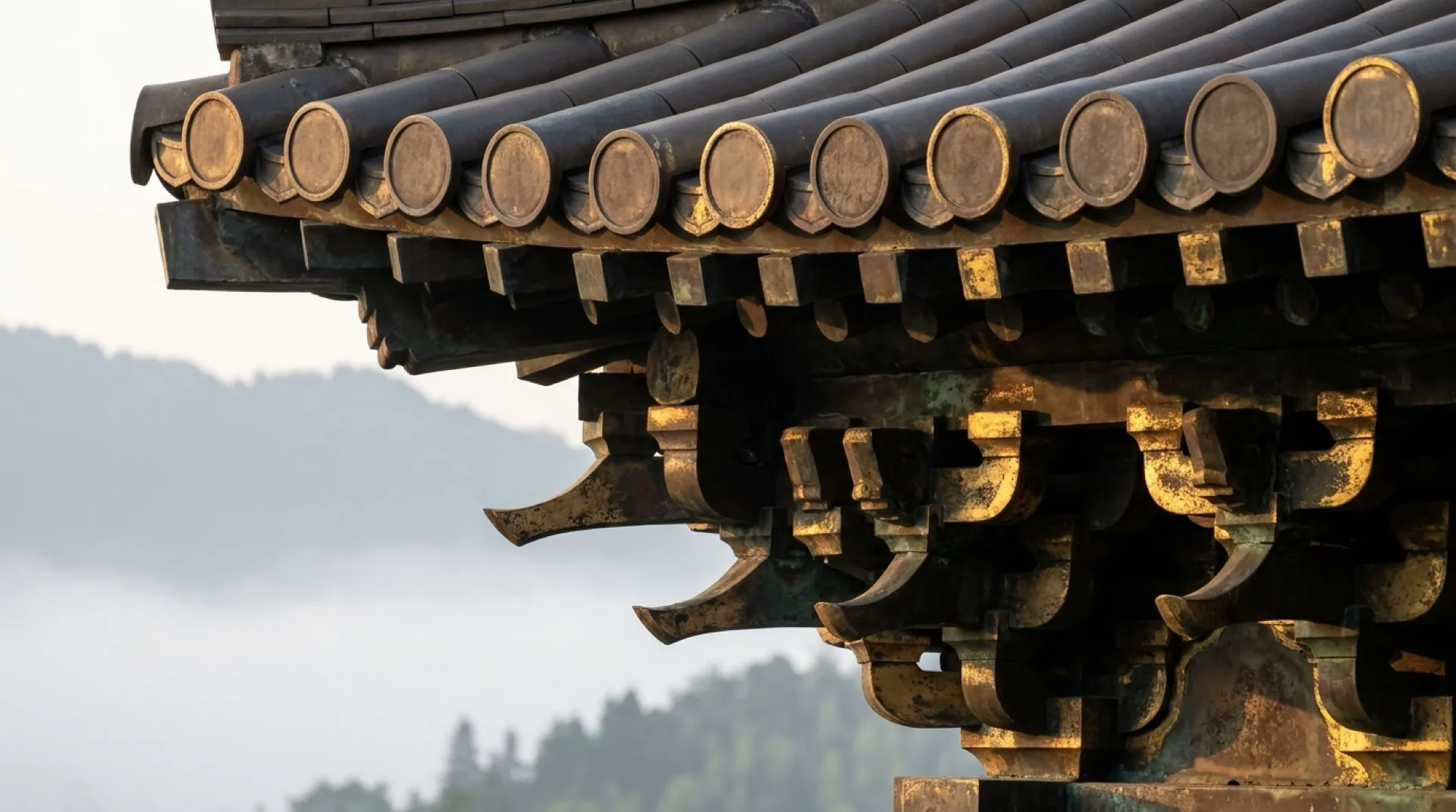
A close view of a temple roof corner with round tile ends and bronze-coloured bracket sets, with misty hills behind.

1. Primary Text & Wang Bi Commentary: Why the Sacred Vessel Cannot Be Forced or Clutched

Chapter 29 of the Tao Te Ching (Dao De Jing) addresses the perennial temptation to seize control of complex living systems through coercive force: 'When someone desires to take the world and act forcefully upon it, I see that they will not succeed (将欲取天下而为之,吾见其不得已). The world is a sacred vessel; it cannot be acted upon by force, and it cannot be clutched (天下神器,不可为也,不可执也). Whoever acts upon it by force ruins it; whoever clutches it loses it (为者败之,执者失之).' In early Chinese ritual culture, a 'sacred vessel' (神器, shenqi)—symbolized by the ceremonial bronze tripod (鼎, ding)—represented the numinous harmony of the realm. Wang Bi (王弼, 226–249 CE) explains that shen (神, spirit/numinous) has no fixed physical shape and qi (器, vessel) is formed through natural synthesis; therefore, any attempt to mold it through arbitrary human contrivance (为, wei) fractures its wholeness, and any attempt to lock it in a rigid grip (执, zhi) alienates what it seeks to hold.

2. The Four Natural Alternations and the Three Removals: Qu Shen, Qu She, Qu Tai

To show why rigid uniformity always fails, Laozi points to four pairs of natural variation: 'Therefore among things, some go ahead and some follow behind (或行或随); some breathe gently warm and some blow cool (或歔或吹); some are strong and some are delicate (或强或羸); some are poised/supported and some are subsiding (或挫或隳). Therefore the sage removes the extreme, removes the extravagant, and removes the excessive (是以圣人去甚,去奢,去泰).' Notice that the pair xu (歔, gentle open-mouthed warming breath) and chui (吹, focused cooling breath) directly anticipates classical Taoist breath cultivation (Daoyin). Rather than forcing every moment or person into a single rigid speed or intensity, the Taoist sage practices a three-fold pruning—cutting away extremity (甚, shen), ostentation (奢, she), and arrogance or over-fullness (泰, tai)—so that natural balance can restore itself.

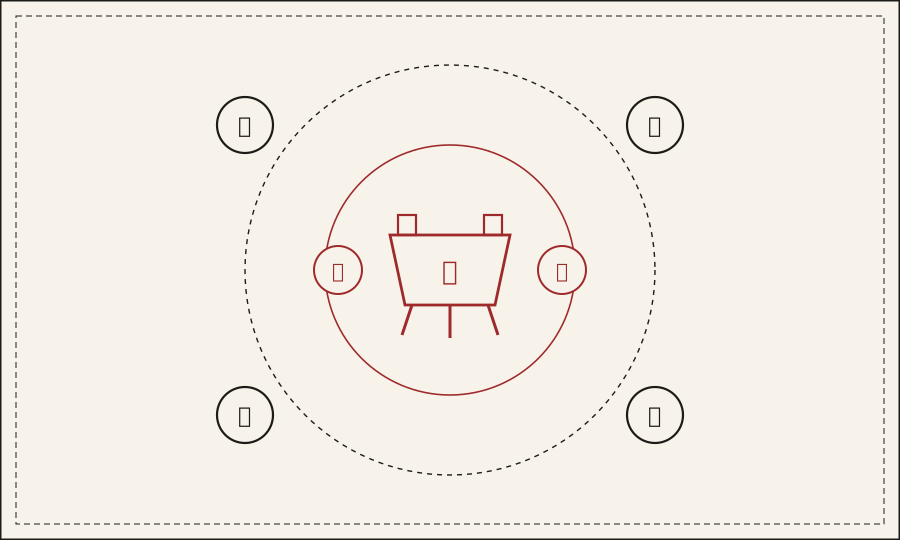
Numbers-only classical Wudang ink-and-cinnabar diagram of Tao Te Ching Chapter 29 showing the four natural alternations (①–④), the three removals (⑤–⑥), and the central Sacred Vessel (⑦).

Classical Wudang diagram of Tao Te Ching Chapter 29 (numbers-only SVG key)

  1. ① Leading and Following (Huo Xing Huo Sui)
  2. ② Warming Breath and Cooling Breath (Huo Xu Huo Chui)
  3. ③ Strong and Delicate (Huo Qiang Huo Lei)
  4. ④ Poised and Subsiding (Huo Cuo Huo Hui)
  5. ⑤ Removing the Extreme and the Extravagant (Qu Shen, Qu She)
  6. ⑥ Removing the Excessive (Qu Tai); ⑦ Central Seal: The Sacred Vessel Cannot Be Forced or Clutched (Tianxia Shenqi, Bu Ke Wei Ye, Bu Ke Zhi Ye).

3. Wudang Internal Cultivation & Taijiquan Embodiment: Treating Body and Breath as a Sacred Vessel

Within Taoist internal alchemy (Neidan) and Wudang internal martial arts—rooted in the heritage of Wudang Mountain's UNESCO World Heritage ancient Taoist architectural complex and practiced daily in Singapore—the phrase 'the world is a sacred vessel' (天下神器) applies equally to the human body-mind microcosm (人身小天地). In seated meditation and standing posture practice, forcing the breath or aggressively chasing sensations in the Dantian is the exact mistake of 'acting upon it and ruining it, clutching it and losing it' (为者败之,执者失之). Likewise, in Wudang Taijiquan push-hands (Tuishou), an opponent sometimes advances and sometimes retreats (或行或随), sometimes issues hard force and sometimes yields (或强或羸); the adept never clings to a predetermined technique, but removes over-extension (去甚), wasted flourish (去奢), and stiff pride (去泰).

4. Cross-References & Practice Bridges Across the Wudang Curriculum

To trace how Chapter 29 builds directly upon Chapter 28's teaching of the Uncarved Block, read Know the Male, Keep to the Female: Returning to the Uncarved Block (Tao Te Ching Ch. 28), The Tao Te Ching Overview, and our newcomer orientation at Start Here: Wudang Taoist Culture, Internal Martial Arts & Wellness. To experience non-coercive spiral mechanics and gentle morning resonance in practice, explore Wudang Horsetail Whisk Fundamentals (Taiji Fuchen & Xuanwu Fuchen), Beating the Heavenly Drum (Ming Tiangu) Daoyin Guide, and our guide to Wudang Mountain.

Seeker’s Q&A · Frequently Asked Questions

What is the core takeaway of The World Is a Sacred Vessel (Tianxia Shenqi)?

A primary-source study of Tao Te Ching (Dao De Jing) Chapter 29, exploring why the world and the human organism are a 'Sacred Vessel' (Shenqi) that cannot be forced or grasped, the four natural alternations of things, and the Taoist discipline of removing the extreme, the extravagant, and the excessive (Qu Shen, Qu She, Qu Tai).
