TAOIST PHILOSOPHY · 道家哲学

Savoring Plain Food and Finding Peace in One’s Dwelling (甘其食,美其服,安其居,乐其俗): Self-Contained Contentment in Tao Te Ching Chapter 80 甘其食,美其服,安其居,乐其俗:《道德经》第八十章“小国寡民”与武当山居返璞的知足哲学

Why Chapter 80 is not a rejection of tools, but a masterclass in owning hundredfold instruments without letting restless expansion steal the sweetness of daily life.

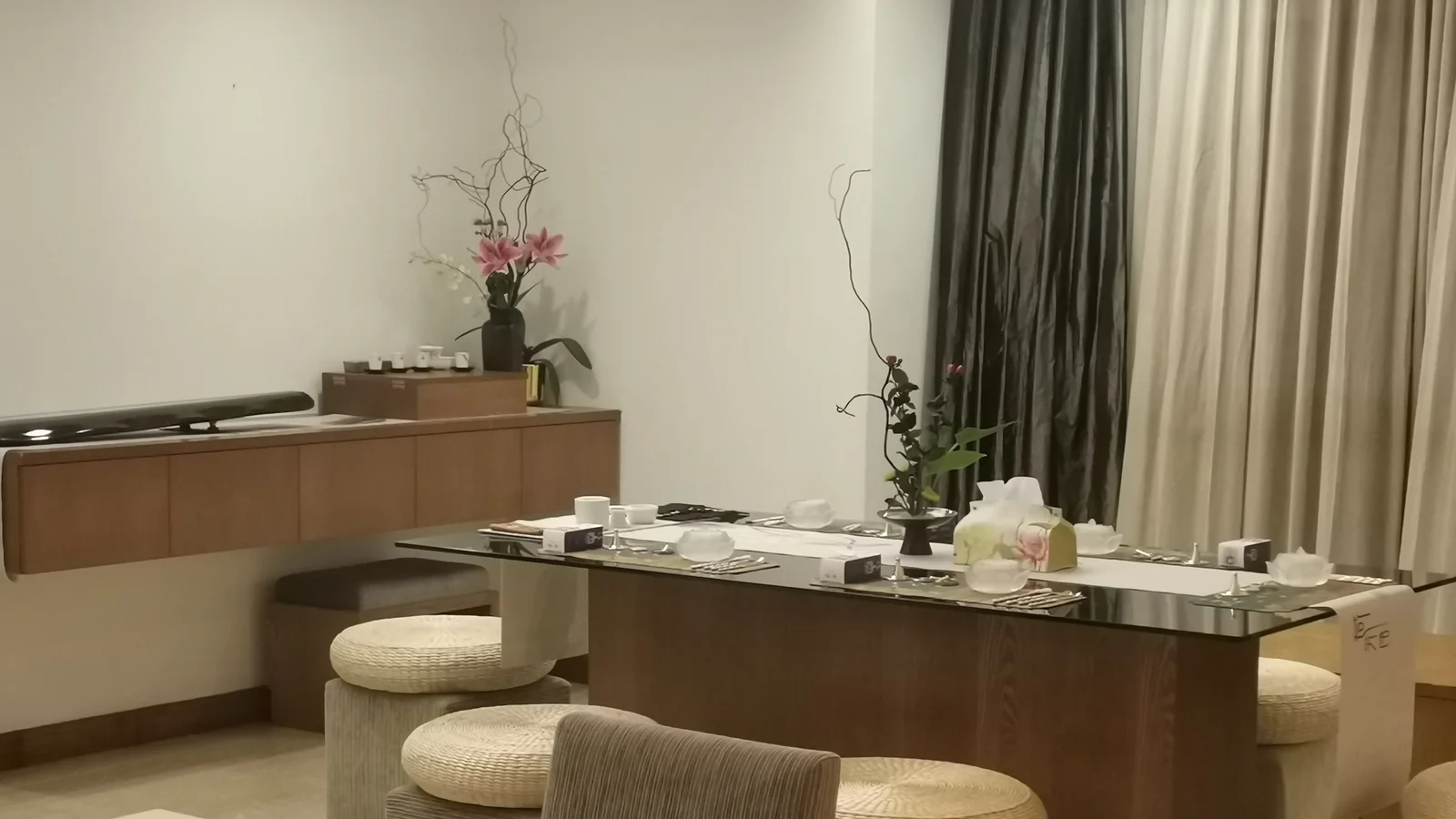
A quiet Taoist study room: a black guqin on a low wooden console beside a pink lily arrangement and tea set, and a dark-glass study table set with white lotus-shaped cups, an incense holder and a floral branch, with straw cushions and a grey curtain.

1. Classical Text and the True Meaning of "Possessing Instruments Yet Not Using Them" (You Qi Er Bu Yong)

Chapter 80 of the Tao Te Ching (Dao De Jing) stands at the summit of the scripture's closing sequence, bridging the reconciliation of Chapter 79 (Holding the Left Tally Without Demanding From Others — Zhi Zuo Qi) and the final seal of Chapter 81 (True Words Are Not Ornate; The Sage Does Not Hoard — Xin Yan Bu Mei):

小国寡民。
使有什伯之器而不用;使民重死而不远徙。
虽有舟舆,无所乘之;虽有甲兵,无所陈之。
使人复结绳而用之。
甘其食,美其服,安其居,乐其俗。
邻国相望,鸡犬之声相闻,民至老死,不相往来。

"Let the state be small and the people few (xiao guo gua min 小国寡民).
Even if there are instruments of tenfold or hundredfold capacity (shi bai zhi qi 什伯之器), let them not be used for restless ambition; let the people value their lives heavily (zhong si 重死) and not migrate far away in search of gain.
Though there are boats and carriages, there is no occasion to ride them out; though there are armor and weapons, there is no occasion to array them.
Let people return to knotting cords and using them (fu jie sheng er yong zhi 复结绳而用之).
They find sweet their plain food (gan qi shi 甘其食), find comely their simple garments (mei qi fu 美其服), find peace in their dwelling (an qi ju 安其居), and find joy in their daily customs (le qi su 乐其俗).
Neighboring states look across at one another, the sounds of cocks crowing and dogs barking are heard across the fields, yet the people grow old and die without restless trafficking back and forth."

Three classical commentarial insights from Wang Bi (王弼, 226–249 CE), Heshang Gong (河上公), and Su Zhe (苏辙, 1039–1112 CE) clear away modern misunderstandings of this chapter:

  1. Why "Boats, Carriages, and Hundredfold Tools" Are Present (You Shi Bai Zhi Qi Er Bu Yong): Notice that Laozi does not say the community lacks tools, boats, or defenses; they have them (suiyou zhou yu 虽有舟舆), yet choose not to let clever tools dictate their desires (er bu yong 而不用). When tools master the human heart, people constantly compare, travel frantically after distant profit, and neglect their own root (echoing Chapter 47 Knowing Without Stepping Out the Door).
  2. Valuing Life Heavily (Zhong Si Er Bu Yuan Xi 重死而不远徙): In contrast to Chapter 75, where people "take death lightly" (Qing Si 轻死) because of obsessive greed, here people "treat death as weighty" (Zhong Si 重死)—meaning they cherish their allotted vital span and refuse to hazard their body and spirit chasing distant vanity.
  3. Heshang Gong's Inner Microcosmic Reading: In Heshang Gong's somatic commentary, the "small state with few desires" (Xiao Guo Gua Min) is the practitioner's own body when sensory cravings are pared back; returning to "knotted cords" (Jie Sheng 结绳) means tying one's attention to simple, trustworthy daily commitments rather than tangled scheming (Ji Xin 机心).
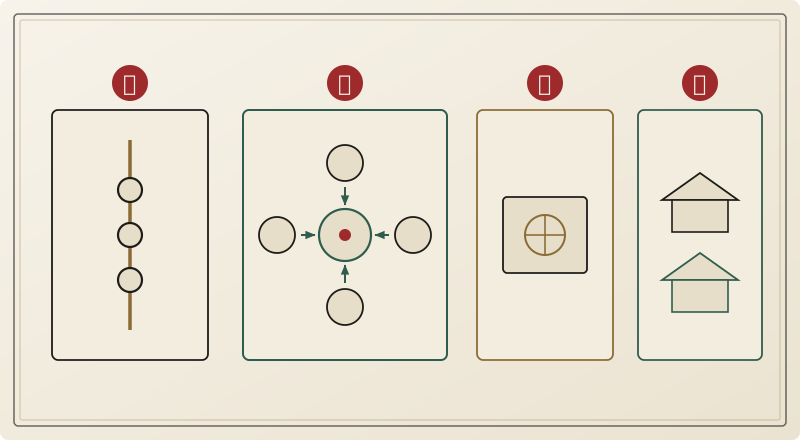
Classical Wudang diagram for Tao Te Ching Chapter 80 showing the knotted cord of simplicity (Jie Sheng) and the four everyday contentments (Gan Qi Shi, Mei Qi Fu, An Qi Ju, Le Qi Su) anchored around the quiet center
Figure 1 — Contemplative Architecture of Chapter 80 (甘其食,美其服,安其居,乐其俗): ① Fu Jie Sheng Er Yong Zhi (复结绳而用之): the three simple knots of unadorned sincerity replacing tangled contrivance; ② The Four Everyday Contentments (Gan Qi Shi, Mei Qi Fu, An Qi Ju, Le Qi Su 甘其食、美其服、安其居、乐其俗) arranged around the calm central hearth of the Dantian; ③ Sui You Zhou Yu / Jia Bing Er Bu Yong (虽有舟舆甲兵而不用): instruments kept at rest in the storehouse rather than driving restless outward expansion; ④ Lin Guo Xiang Wang (邻国相望): two neighboring courtyards in peaceful coexistence without intrusive contention.

2. The Four Everyday Contentments (Gan Qi Shi, Mei Qi Fu, An Qi Ju, Le Qi Su)

In Wudang mountain-retreat culture (Shan Ju 山居) and daily cultivation, the four three-character phrases at the heart of Chapter 80 serve as a practical rule of life:

Classical PhraseOuter Daily MeaningInner Contemplative & Somatic MeaningRelated Wudang Principle
Gan Qi Shi (甘其食 — Savoring One's Plain Food)When appetite is not jaded by rich banquets (Ch. 53 Yan Yin Shi), plain millet, greens, and mountain spring water taste naturally sweetNourishing the lower Dantian with quiet breath and swallowing the "Jade Fluid" (Yu Ye 玉液) in meditationChoosing the Belly Over the Eye (Ch. 12)
Mei Qi Fu (美其服 — Appreciating One's Simple Garments)Wearing loose, breathable cotton and linen robes for warmth and ease of movement rather than status displayWrapping one's outer conduct in humility while holding inner virtueWearing Coarse Cloth While Holding Jade Within (Ch. 70)
An Qi Ju (安其居 — Finding Peace in One's Dwelling)Resting content in a clean, uncrowded room without envying palacesKeeping the thoracic "Heart-House" spacious so the Spirit (Shen) rests undisturbedDo Not Cramp Their Dwelling (Ch. 72)
Le Qi Su (乐其俗 — Delighting in One's Quiet Customs)Taking joy in the steady seasonal rhythm of dawn practice, work, tea, and restFollowing the natural rhythm of the body's meridians without chasing noveltyWudang Twelve Two-Hour Periods (Shi'er Shichen)

3. Wudang Somatic & Martial Application: "Not Migrating Far Away" (Bu Yuan Xi 不远徙)

In Wudang Taijiquan and Qigong, "not migrating far away" (Bu Yuan Xi 不远徙) means never letting your center of gravity or your mind-intent (Yi) wander outside your own base of support:

  • Keeping the Root Home During High Kicks (Fenjiao and Dengjiao): Even in expansive postures like Separation of Right and Left Feet (Zuoyou Fenjiao) and Heel Kick (Dengjiao), the practitioner never lunges or throws their torso after the kicking foot. The pelvis (Kwa) stays calmly "at home" over the standing heel (An Qi Ju 安其居, aided by loosened hip gates at Huantiao and Fengshi).
  • Digital & Mental Sabbatical (Er Bu Yong 而不用): We all possess "instruments of hundredfold capacity"—smartphones, instant notifications, and endless information streams. Practicing Chapter 80 today means deliberately setting those instruments aside during your morning or evening practice hour so your spirit can "return to knotting cords"—counting thirty-six slow breaths in complete simplicity.

Practice Reflection for Students

At your next meal or cup of warm tea, practice Gan Qi Shi (甘其食) and Er Bu Yong (而不用): set all screens out of reach, take one quiet abdominal breath before lifting the bowl or cup, and taste plain food with an undivided mind.

Seeker’s Q&A · Frequently Asked Questions

Does Tao Te Ching Chapter 80 tell us to give up tools and travel?

No. Laozi does not say the small community lacks boats, carriages or tools of “tenfold and hundredfold capacity”; it has them and chooses not to let them drive its desires (而不用). What the chapter teaches is contentment with what is near: finding plain food sweet, simple clothes comely, one’s dwelling peaceful and daily customs a joy (甘其食,美其服,安其居,乐其俗). Heshang Gong reads the “small state” as the practitioner’s own body once sensory cravings are pared back. A present-day way to practice it is to put your phone out of reach for the hour of your morning or evening practice.

How can I apply this in practice?

At your next meal or cup of warm tea, practice Gan Qi Shi (甘其食) and Er Bu Yong (而不用): set all screens out of reach, take one quiet abdominal breath before lifting the bowl or cup, and taste plain food with an undivided mind.
