
TAOIST PHILOSOPHY · 道家哲学

A Journey of a Thousand Li Begins Underfoot (Qianli zhi Xing Shiyu Zuxia): Gradual Cultivation and Caring for the End in Tao Te Ching Chapters 63–64 千里之行,始于足下:《道德经》第六十三、六十四章的微明渐修与慎终如始

Explore Tao Te Ching (Dao De Jing) Chapters 63 and 64 on accomplishing great things while they are small, Han Feizi's parables of Bian Que and the ant-hole in the dyke, and why 'caring for the end as the beginning' sustains lifelong Wudang practice.


A winding stone-paved path leading through bamboo and pines toward misty blue mountains at dawn.

1. Working on What Is Not Yet Visible: Chapters 63 and 64 in Context

Chapters 63 and 64 of the Tao Te Ching (Dao De Jing) form a continuous meditation on scale, timing, and patience. Chapter 63 advises: 'Plan for the difficult while it is easy; do the great while it is small. All difficult things under heaven must begin from what is easy; all great things under heaven must begin from what is minute.' Chapter 64 then grounds this law in three unforgettable natural and architectural images: 'A tree spanning two arms' embrace grows from the tip of a tiny shoot (haomo 毫末); a nine-tiered terrace rises from baskets of heaped earth (leitu 累土); a journey of a thousand li begins directly beneath one's feet (zuxia 足下).'

In the Han Feizi (Yulao 喻老), these chapters are illustrated through two famous historical parables examined on our Tao Te Ching Chapter 63 and Chapter 64 study pages: the physician Bian Que warning Duke Huan of Cai while his illness was still only skin-deep (couli 腠理), and a thousand-fathom river dyke collapsing through the tiny burrow of an ant. Whether tending health, character, or martial skill, waiting until a problem is dramatic makes every intervention exhausting; tending the root when it is barely noticeable makes cultivation effortless.

2. Why 'A Journey of a Thousand Li Begins Underfoot' Is a Present-Moment Instruction

In modern popular usage, 'a journey of a thousand li begins with a single step' is often quoted as a motivational slogan about ambition and distant goals. Yet Laozi's exact wording in Chapter 64 is shi yu zuxia (始于足下)—literally 'begins beneath the foot.' The emphasis is not on dreaming about the thousandth mile on the horizon, nor even on lunging forward, but on feeling the ground directly underneath your soles right now.

In Wudang internal martial arts and Qigong, this distinction is immediately practical. A student who practices Zhan Zhuang (Standing Meditation) or walking meditation and crane-stepping while impatiently wishing for advanced martial power is mentally living a thousand li ahead, leaving the feet hollow and the breath shallow. When awareness returns 'beneath the foot,' each quiet breath and each weight transfer becomes complete in itself.

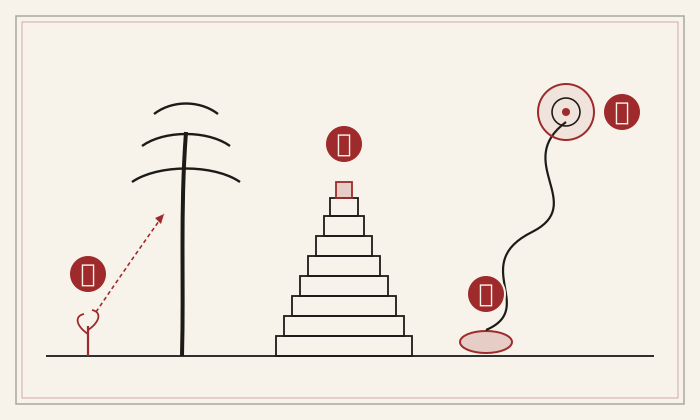
Classical diagram illustrating Tao Te Ching Chapter 64: a tiny shoot growing into an ancient pine, baskets of earth forming a nine-tiered terrace, a grounded footstep beginning a mountain path, and completing the final tenth with care

The four images of gradual cultivation and completion in Tao Te Ching Chapter 64.

  1. ① Tiny Shoot to Great Pine (Hebao zhi Mu Sheng Yu Haomo): Vital root cultivated while still microscopic.
  2. ② Basket of Earth to Nine-Tiered Terrace (Jiuceng zhi Tai Qi Yu Leitu): Structural stability built layer upon layer without skipping foundations.
  3. ③ A Thousand Li Begins Underfoot (Qianli zhi Xing Shi Yu Zuxia): Attention anchored in the present step rather than anxious projection.
  4. ④ Caring for the End as the Beginning (Shen Zhong Ru Shi): Maintaining composure at the 90-percent mark where most endeavors falter.

3. 'Caring for the End as the Beginning' (Shen Zhong Ru Shi): The Ninety-Percent Threshold

After describing how great trees, terraces, and journeys begin from the small, Chapter 64 diagnoses why people still fail even after years of effort: 'People in their handling of affairs constantly spoil them just when they are on the verge of completion. Caring for the end just as at the beginning (shen zhong ru shi 慎终如始), there are no spoiled affairs.' A proverb cited by classical commentators observes that in a journey of a hundred li, ninety li is only halfway—because the last ten li are when fatigue, pride, and haste tempt the traveler to drop guard.

On the Wudang training floor, you can see this in the final postures of a Taijiquan form or the closing breaths of Qigong. Beginners frequently rush through the closing posture once the 'impressive' movements are finished, letting the shoulders hike and the breath scatter. Treating the final closing breath with the same quiet reverence as the opening posture seals the practice into the bones.

4. A Daily Practice: One Small Layer of Earth (Leitu) Every Morning

Rather than attempting an occasional two-hour heroic workout followed by weeks of exhaustion, apply Chapter 64's principle of leitu (heaping baskets of earth) to your daily rhythm. Choose one five-minute foundational practice—such as morning Wudang Daoyin joint-opening or six slow cycles of natural abdominal breathing—and perform it at the same hour each day without skipping the quiet closing breaths.

Safety note: this philosophical and movement study guide supports sustainable daily habits and postural mindfulness; it is educational and not a substitute for medical diagnosis or treatment.

Seeker’s Q&A · Frequently Asked Questions

What is the core takeaway of A Journey of a Thousand Li Begins Underfoot (Qianli zhi Xing Shiyu Zuxia)?

Explore Tao Te Ching (Dao De Jing) Chapters 63 and 64 on accomplishing great things while they are small, Han Feizi's parables of Bian Que and the ant-hole in the dyke, and why 'caring for the end as the beginning' sustains lifelong Wudang practice.
