TAOIST PHILOSOPHY · 道家哲学

Thirty Spokes Share One Hub (San Shi Fu Gong Yi Gu): How Form (You) Provides Advantage While Emptiness (Wu) Provides Function in Tao Te Ching Chapter 11 三十辐共一毂:《道德经》第十一章“有之以为利,无之以为用”的器用之道与太极车轮身法

Explore Tao Te Ching (Dao De Jing) Chapter 11's three classic analogies—the wheel hub, the clay vessel, and the room with doors and windows—and how Wudang Taijiquan unites physical structure (You) with hollow joint space (Wu).


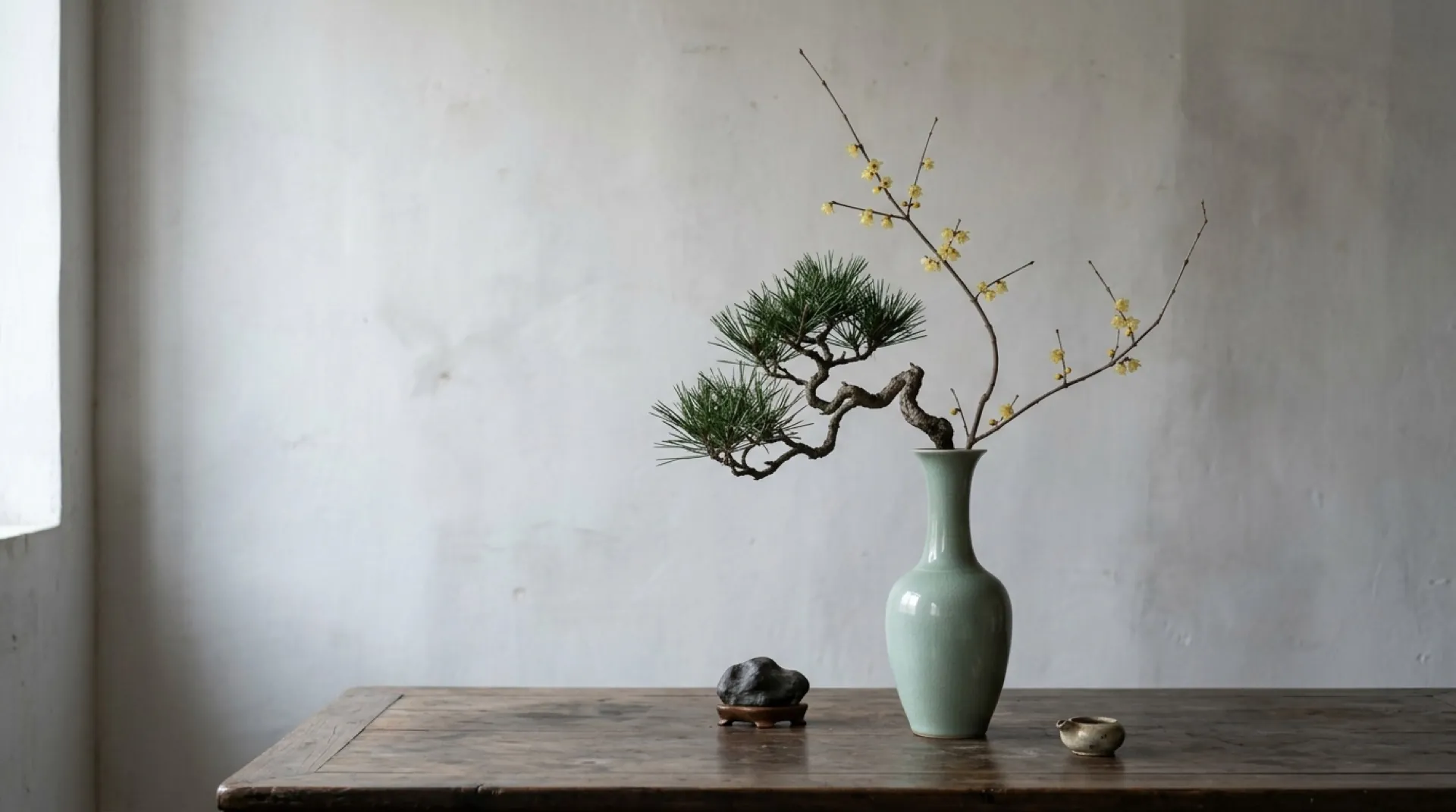
A celadon vase holding a pine branch and a sprig of yellow blossom on a wooden table against a plain plaster wall.

1. The Three Everyday Objects That Reveal the Mystery of 'You' and 'Wu'

While our general introduction to You and Wu: Empty Space surveyed the broad philosophical landscape of presence and non-presence, Chapter 11 of the Tao Te Ching (Dao De Jing) deserves close line-by-line attention for the three craftsman's images Laozi places side by side: the wheelwright's hub (gu 毂), the potter's clay vessel (qi 器), and the carpenter's room (shi 室).

As the received text reads (see our Tao Te Ching Chapter 11 study page): 'Thirty spokes share a single hub; right where there is nothing (dang qi wu 当其无), lies the usefulness of the cart. We knead clay to make a vessel; right where there is nothing, lies the usefulness of the vessel. We cut out doors and windows to make a room; right where there is nothing, lies the usefulness of the room. Therefore, what is present (You 有) provides the advantage (li 利); what is absent (Wu 无) provides the function (yong 用).'

2. Why Neither Pure Solidity Nor Pure Nothingness Can Turn the Wheel

A careless reader sometimes mistakes Chapter 11 for a praise of emptiness against form. Yet Laozi is far more precise: if you throw away the wooden rim, the thirty spokes, the fired clay walls, or the timber pillars, you have no wheel, no cup, and no room at all—only open air.

Tangible form (You) provides the necessary structural boundary (li 利, the instrument or material benefit), while the unblocked hollow within (Wu) allows that structure to move, hold, and breathe (yong 用, living function). Notice how this complements The Tao Is Like an Empty Vessel (Chapter 4): form and emptiness are partners in every craft.

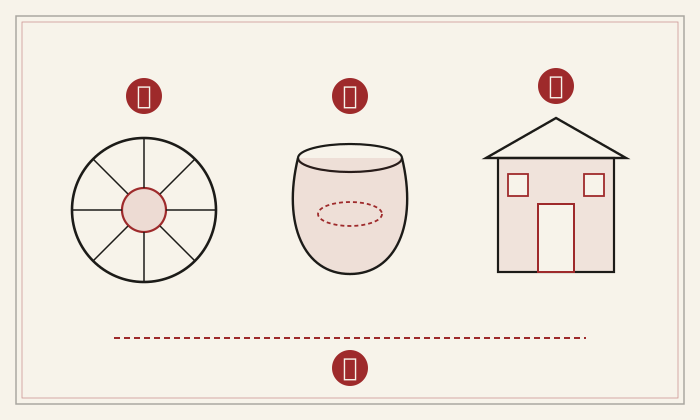
Classical three-part diagram of Tao Te Ching Chapter 11 showing the thirty-spoked wheel with its hollow hub, the molded clay vessel with its hollow interior, and the timber room with its open doors and windows

Tao Te Ching Chapter 11's three images of form and emptiness: ① The Wheel Hub, ② The Clay Vessel, ③ The Room with Doors and Windows, united by ④ 'You Provides Advantage, Wu Provides Function.'

  1. ① San Shi Fu Gong Yi Gu (The Wheel Hub): Solid wooden spokes converge on a hollow center that lets the axle turn.
  2. ② Shan Zhi Yi Wei Qi (The Clay Vessel): Molded clay walls enclose an empty space that holds water and grain.
  3. ③ Zao Hu You Yi Wei Shi (The Room): Solid timber walls and roof frame open doors, windows, and livable interior space.
  4. ④ You Zhi Yi Wei Li, Wu Zhi Yi Wei Yong: Tangible structure provides the instrument; empty space makes it work.

3. The 'Wheel Hub' of the Waist and Hollow Joints in Wudang Taijiquan

In Wudang internal martial arts, the first image of Chapter 11—thirty spokes converging on a single hollow hub—is a direct biomechanical description of the waist (yao 腰) and pelvic inguinal crease (Songkua). Wang Zongyue's Taijiquan Lun famously states: 'Stand like a balance scale; rotate like a cartwheel' (li ru pingzhun, huo si chelun 立如平准,活似车轮).

Your bones, tendons, and postural alignments are the 'thirty spokes' (You); the relaxed, uncompressed space inside your shoulder sockets, hip sockets, and central equilibrium axis (Zhongding) is the 'hollow hub' (Wu). If you lock your hip joints solid with muscular tension, it is like driving a wooden plug into the wheel hub—the cart immediately grinds to a halt.

4. Practical Application: Designing Space into Your Posture and Schedule

You can test Chapter 11 both on the training floor and at your desk. In Standing Post (Zhan Zhuang), imagine a tiny hollow hub inside your armpits, hip creases, and the center of your palms (Laogong) so circulation can pass freely through every joint. In your daily schedule, let your appointments be the 'walls of the room' (You) while deliberately protecting unscheduled quiet intervals—like a five-minute chest-soothing Daoyin break—as the 'doors and windows' (Wu) that make the day livable.

Safety note: this philosophical and postural study guide is educational and is not a substitute for medical or psychological care.

Seeker’s Q&A · Frequently Asked Questions

What is the core takeaway of Thirty Spokes Share One Hub (San Shi Fu Gong Yi Gu)?

Explore Tao Te Ching (Dao De Jing) Chapter 11's three classic analogies—the wheel hub, the clay vessel, and the room with doors and windows—and how Wudang Taijiquan unites physical structure (You) with hollow joint space (Wu).
