TAOIST PHILOSOPHY · 道家哲学

Huang Zongxi’s 1669 Epitaph for Wang Zhengnan (王征南墓志铭): The Earliest Dated Historical Record of Wudang Internal Martial Arts (Neijia) and Overcoming Movement Through Stillness 黄宗羲《王征南墓志铭》(1669)精解:武当内家拳最早信史文献、“以静制动、犯者应手即仆”与择人而传之武德考辨

Distinguishing lineage legend from dated 17th-century scholarship: how the Ming-Qing historian Huang Zongxi defined Wudang Neijia, traced the Zhang Songxi–Wang Zhengnan transmission, and recorded the ethical code of the internal arts.

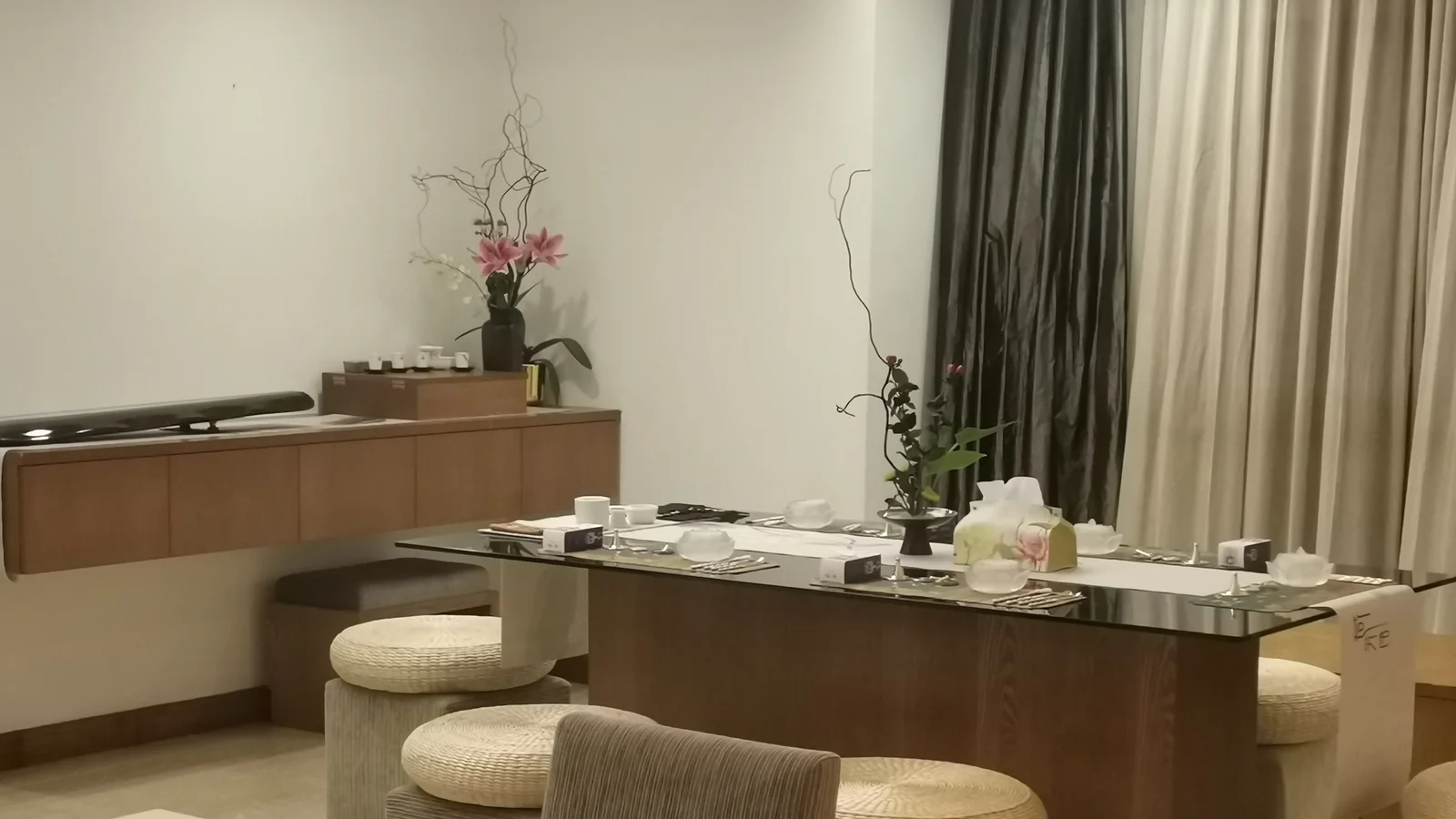
A quiet Taoist study room: a black guqin on a low wooden console beside a pink lily arrangement and tea set, and a dark-glass study table set with white lotus-shaped cups, an incense holder and a floral branch, with straw cushions and a grey curtain.

1. Primary-Source Historiography: Why Huang Zongxi's 1669 Epitaph for Wang Zhengnan Is the Cornerstone of Wudang Neijia History

In the serious study of Wudang martial culture, a scholar-practitioner must distinguish clearly between inspirational lineage lore and dated, verifiable primary historical documents. Prior to the late 17th century, Ming military encyclopedias—such as Qi Jiguang's Jixiao Xinshu (纪效新书, c. 1560) and Mao Yuanyi's Wubei Zhi (武备志, 1621)—catalogued regional boxing styles across China, and the Ningbo Prefectural Gazetteer tradition celebrated the mid-16th-century master Zhang Songxi (张松溪) for neutralizing aggressive challengers through yielding skill. However, the exact philosophical and technical classification dividing Chinese martial arts into External (Waijia 外家) and Internal (Neijia 内家) enters dated historical record in 1669 CE (the eighth year of the Kangxi reign), when the great Ming-loyalist historian and thinker Huang Zongxi (黄宗羲, 1610–1695, styled Lizhou 梨洲) composed the Epitaph for Wang Zhengnan (Wang Zhengnan Muzhiming 王征南墓志铭), preserved in his collected prose Nanlei Wen'an (南雷文案).

Who was Wang Zhengnan, and why did China's foremost historian write his epitaph? Wang Laixian (王来咸, 1617–1669), courtesy name Zhengnan (征南), was a native of Yin County (modern Ningbo, Zhejiang) and a lifelong friend of the Huang family during the Ming-Qing transition. So deeply did Huang Zongxi respect Wang Zhengnan's character and art that he sent his own son, the scholar-astronomer Huang Baijia (黄百家, 1643–1709), to train formally under Wang Zhengnan; seven years later (1676), Huang Baijia authored the technical treatise Neijia Quanfa (内家拳法, Methods of the Internal School of Boxing), preserving the earliest extant training curriculum of the Wudang-attributed Neijia lineage.

Near the opening of the 1669 Epitaph, Huang Zongxi writes verbatim:

少林以拳勇名天下,然主于搏人,人亦得而乘之。
有所为「内家」者,以静制动,犯者应手即仆,故别少林为「外家」。
盖起于宋之张三峯。三峯为武当丹士,徽宗召之,道梗不得进,夜梦玄帝授之拳法,厥明以单丁杀贼百余。

"Shaolin is famous throughout the world for valiant boxing; yet because it focuses primarily on striking others (zhu yu bo ren 主于搏人), others can likewise seize the opening and take advantage of it (ren yi de er cheng zhi 人亦得而乘之).
There is that which is called the 'Internal School' (Neijia 内家), which overcomes movement through stillness (yi jing zhi dong 以静制动), so that whoever initiates an attack falls at the touch of the hand (fan zhe ying shou ji pu 犯者应手即仆); thus Shaolin is distinguished as the 'External School' (Waijia 外家).
It is said to have originated with Zhang Sanfeng of the Song. Sanfeng was a Taoist alchemist of Wudang (Wudang danshi 武当丹士); summoned by Emperor Huizong when the roads were blocked, he dreamed at night that the Dark Emperor (Xuandi / Zhenwu) transmitted the boxing method to him, and at dawn single-handedly defeated over a hundred bandits."

A rigorous historical reading of this famous paragraph honors two distinct layers simultaneously:

  1. The Origin Narrative as Hagiographic Tradition (Gai Qi Yu...): Notice that Huang Zongxi introduces the Zhang Sanfeng dream story with the classical historiographical particle Gai (盖—"it is traditionally said / attributed that..."), noting the Song-era hagiography (whereas historical Ming imperial records document Zhang Sanfeng as a late-Yuan to early-Ming Taoist ascetic sought by the Yongle Emperor Zhu Di during the construction of the Wudang temple complex).
  2. The Verifiable Ming-Qing Historical Lineage: Immediately after recording the Wudang attribution, Huang Zongxi documents a concrete, geographically traceable human transmission across four generations: from Wang Zong (王宗) of Shaanxi, to Chenzhou's Zhang Songxi (陈州张松溪, active in Ningbo during the Jiajing era, 1522–1566), to Ye Jimei (叶继美) of Siming, to Shan Sinan (单思南), and directly to Wang Zhengnan (王征南, 1617–1669) and Huang Baijia (黄百家).
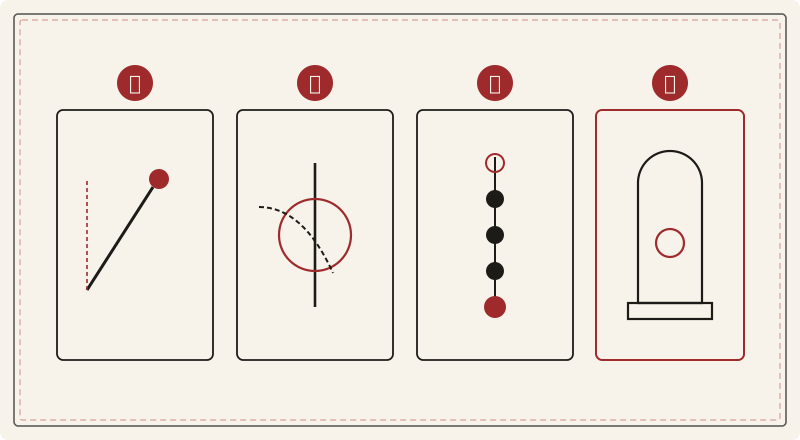
Classical four-panel Wudang diagram for Huang Zongxi's 1669 Epitaph for Wang Zhengnan illustrating External collision vs Internal stillness-overcoming-movement, the documented Ming-Qing transmission chain, and the ethical seal of selective transmission
Figure 1 — Historiographical and Biomechanical Architecture of the 1669 Epitaph for Wang Zhengnan (王征南墓志铭): ① Waijia Zhu Yu Bo Ren (外家主于搏人): lunging outward to strike creates a structural gap that an opponent can exploit; ② Neijia Yi Jing Zhi Dong (内家以静制动,犯者应手即仆): abiding in central stillness so incoming aggression unbalances itself upon contact; ③ The documented 16th–17th century transmission line from Wang Zong and Zhang Songxi through Ye Jimei and Shan Sinan to Wang Zhengnan and Huang Baijia; ④ Ze Ren Er Chuan (择人而传): ethical self-restraint and unostentatious daily life.

2. "Focusing on Striking Others" vs. "Overcoming Movement Through Stillness" (Yi Jing Zhi Dong 以静制动)

Why does Huang Zongxi's 23-character contrast between Waijia and Neijia remain the clearest biomechanical summary of internal martial arts ever written? Let us examine the exact mechanics behind his two clauses:

  • Why "Focusing on Striking Others Gives Others an Opening" (Zhu Yu Bo Ren, Ren Yi De Er Cheng Zhi 主于搏人,人亦得而乘之): Whenever a fighter's primary intention is to lunge out and hit first, three physical consequences occur before the fist even reaches its target: the mind projects outside the body (violating the Yinfu Jing principle of guarding the visual pivot Ji Zai Mu), the center of gravity commits along a single predictable vector, and the shoulder-chest frame stiffens. In the words of the Tao Te Ching (Chapters 24 and 67), one who stands on tiptoe is not steady, and one who rushes ahead exposes their flank.
  • Why "Overcoming Movement Through Stillness" Causes the Attacker to Fall at a Touch (Yi Jing Zhi Dong, Fan Zhe Ying Shou Ji Pu 以静制动,犯者应手即仆): In Neijia—and later in the Taijiquan Lun maxim "If the opponent does not move, I do not move; at the opponent's slightest stir, I move first" (Bi Bu Dong, Ji Bu Dong; Bi Wei Dong, Ji Xian Dong 彼不动,己不动;彼微动,己先动)—"stillness" (Jing 静) does not mean standing like a wooden post waiting to be hit. Rather, as the Qingjing Jing defines Chang Ying Chang Jing (constantly responding, constantly still), it means keeping one's own Three Dantian (Huangting Jing) centered and unhurried while the attacker commits their weight. Because your own center has not leaned out, you perceive the exact angle and speed of the incoming force the instant it forms and redirect it along its own tangent.
Passage in the 1669 EpitaphHistorical & Philosophical ContextBiomechanical & Ethical Meaning in Wudang Practice
少林以拳勇名天下,然主于搏人,人亦得而乘之Critiques aggressive first-strike lunging that sacrifices one's own central equilibriumOver-reaching with the hands or leaning past the front knee exposes one's balance
有所为「内家」者,以静制动,犯者应手即仆First dated textual definition of Neijia, rooted in Tao Te Ching Chapters 16, 26, and 61 (Jing Wei Zao Jun)Maintaining central equilibrium (Zhongding) and supple wrist/forearm listening (Neiguan–Waiguan) so incoming force empties itself
由张松溪至叶继美、单思南、王征南Verifiable Ming-Qing transmission in eastern Zhejiang (Ningbo / Siming)Demonstrates how Wudang philosophical principles were embodied in rigorous, testable martial pedagogy
凡搏人皆以其穴 (Striking / Controlling by Acupoints & Structural Gates)Records that Wang Zhengnan understood meridian gates (mute, numb,晕, and structural locks) alongside six-harmony steppingHighlights why Wudang martial arts and meridian Daoyin form a single undivided curriculum
择人而传,不露圭角 (Selecting upright students; hiding sharp edges)Wang Zhengnan farmed, lived plainly, and never boasted or brawled in publicTrue internal mastery manifests as humility (Tao Te Ching Chapter 70 Wearing Coarse Cloth While Holding Jade)

3. Meridian Precision and "Never Showing Sharp Edges" (Bu Lu Guijiao 不露圭角)

Two further details in Huang Zongxi's 1669 Epitaph illuminate the character of authentic Wudang Neijia:

  1. Integration of Meridian Anatomy and Structural Mechanics: Huang Zongxi records that Wang Zhengnan's method did not rely on trading heavy blows, but on precise knowledge of the human body's meridian gates (Xue 穴) and joint hinges—coupled with disciplined stepping, waist rotation, and arm spiraling (further detailed in Huang Baijia's 1676 Neijia Quanfa under the "Six Paths" and "Ten Segments" of practice, and echoed in Wudang straight sword and horsetail whisk Fuchen training).
  2. The Ethical Code of Unostentatious Virtue: Throughout his life, Wang Zhengnan refused to display his martial skill for money or tavern bragging. Even when tested by arrogant soldiers, he resolved conflicts with minimal force and lived quietly in his village until his passing at age fifty-three. Both Shan Sinan and Wang Zhengnan enforced strict ethical screening (Ze Ren Er Chuan 择人而传), teaching only students who valued self-restraint, filial conduct, and peace over pugnacity.

4. Living Heritage on Wudang Mountain and in Singapore

Across the historical study halls and UNESCO World Heritage ancient Taoist temples on Wudang Mountain (No. 72 Jianhe 2nd Road, Wudangshan, Hubei, China; UNESCO World Heritage guide) and the modern classroom curriculum at Lee Wudang International Pte. Ltd. (58A Smith Street (2nd Floor), Singapore 058962; beginner guide), Huang Zongxi's 1669 Epitaph for Wang Zhengnan is studied both as a benchmark of historical honesty—teaching students to respect dated textual evidence alongside cultural heritage—and as a daily postural reminder: whenever you practice standing post Zhan Zhuang or solo form, ask yourself whether your movement is rushing out to "strike" (Bo Ren) or resting securely in "stillness governing movement" (Yi Jing Zhi Dong).

Practice Reflection for Students

During your next form practice—especially in forward transitions such as Twin Peaks Pierce the Ears (Shuangfeng Guan'er)—check your front knee and sternum at the end of each step: if your torso leans even two centimeters ahead of your hips, pause, settle your weight back into your central axis, and experience the calm stability of Yi Jing Zhi Dong.

Seeker’s Q&A · Frequently Asked Questions

What is the earliest dated record of Wudang internal martial arts (Neijia)?

It is the Epitaph for Wang Zhengnan (王征南墓志铭), written in 1669 by the historian Huang Zongxi (1610–1695). This is where the division of Chinese martial arts into an External School (Shaolin, which “focuses on striking others”) and an Internal School (which “overcomes movement through stillness”, so that the attacker “falls at the touch of the hand”) enters the dated record. Huang introduces the origin story of Zhang Sanfeng of Wudang as tradition, with the particle gai (盖, “it is said”), and then records a traceable line of teachers from Wang Zong and Zhang Songxi down to Wang Zhengnan (1617–1669), who taught Huang’s son Huang Baijia.


How can I apply this in practice?

During your next form practice—especially in forward transitions such as Twin Peaks Pierce the Ears (Shuangfeng Guan'er)—check your front knee and sternum at the end of each step: if your torso leans even two centimeters ahead of your hips, pause, settle your weight back into your central axis, and experience the calm stability of Yi Jing Zhi Dong.
