TAOIST PHILOSOPHY · 道家哲学

Constant Clarity and Stillness (常清静经 Qingjing Jing): Sending Away Desire, Clarifying the Heart-Mind, and Living Responsiveness in Wudang Taoist Practice 《太上老君说常清静经》精解:由“澄心遣欲、三观照妄”契入“真常应物,常应常静”的武当修真之道

How a compact Tang-era Taoist liturgical scripture bridges the Tao Te Ching to daily Wudang seated meditation, standing posture, and unhurried martial responsiveness.

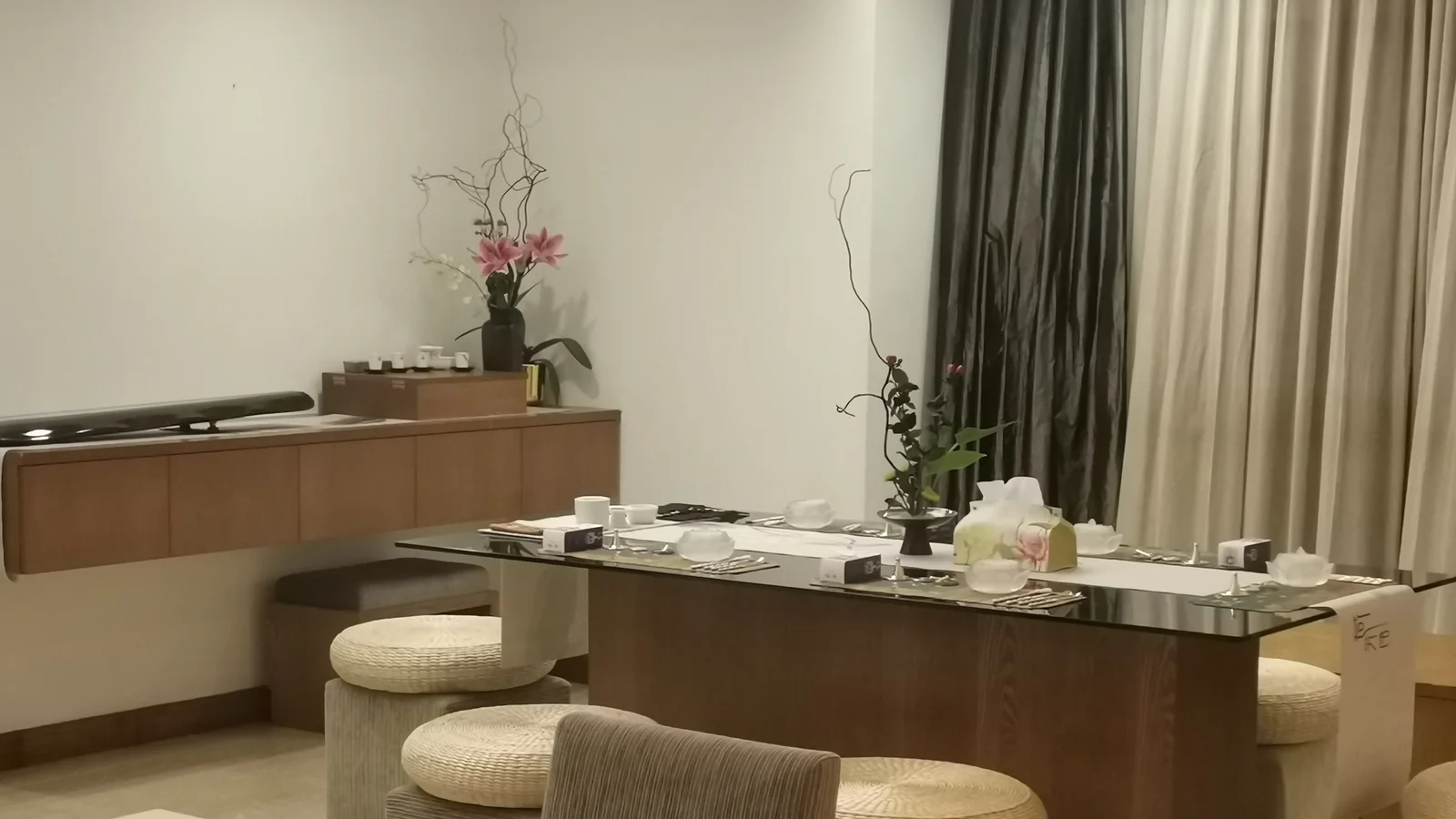
A quiet Taoist study room: a black guqin on a low wooden console beside a pink lily arrangement and tea set, and a dark-glass study table set with white lotus-shaped cups, an incense holder and a floral branch, with straw cushions and a grey curtain.

1. Historical Context and the Opening Triplet of the Qingjing Jing

Among the foundational scriptures chanted at dawn in the temple halls of Wudang Mountain, none is more concise or more frequently memorized alongside the Tao Te Ching than the Taishang Laojun Shuo Chang Qingjing Jing (太上老君说常清静经, Scripture of Constant Clarity and Stillness). While traditional colophons attribute its oral transmission to Ge Xuan (葛玄, 164–244 CE) of the Three Kingdoms period, textual historians date its received literary structure to the Tang dynasty (with early commentaries by figures such as Du Guangting 杜光庭, 850–933 CE), where classical Lao-Zhuang quietude (Zhuangzi) was woven together with rigorous contemplative observation (Guan 观). Rather than speculating on hidden cosmological numbers, the scripture opens with three crystalline propositions regarding the Tao itself:

大道无形,生育天地;大道无情,运行日月;大道无名,长养万物;吾不知其名,强名曰道。

"The Great Tao has no fixed form (Dadao wuxing 大道无形), yet it brings forth and nurtures Heaven and Earth; the Great Tao has no partial sentiment (Dadao wuqing 大道无情), yet it revolves the sun and the moon; the Great Tao has no limiting name (Dadao wuming 大道无名), yet it fosters and matures the ten thousand things. I do not know its name; forced to give it a designation, I call it the Tao."

For a Wudang practitioner, each of these three negations removes a specific obstacle in seated meditation and standing Zhan Zhuang:

  1. Formless (Wuxing 无形) Enables Infinite Adaptation: Any tool locked into a single rigid shape can serve only one narrow task. Because the Tao itself clings to no fixed form, it gives rise to the entire architecture of sky and earth. In Wudang Taijiquan, if a student freezes into a stiff, picturesque frame, their transitions immediately jam; only an internally unfixed, supple alignment can adapt seamlessly to changing vectors.
  2. Impartial (Wuqing 无情) Means Unfailing Regularity, Not Cold Indifference: In classical Chinese philosophy, Wuqing here does not mean cruelty; it mirrors Chapter 5 of the Tao Te Ching and the seasonal constancy of Heaven and Earth. The sun and moon do not shine brighter on favorites or withhold light out of irritation. Likewise, in daily cultivation, one practices steadily whether the mood feels inspired or ordinary.
  3. Nameless (Wuming 无名) Prevents Conceptual Hoarding: Echoing Chapters 1 and 25 of the Tao Te Ching, naming is recognized as a provisional finger pointing toward direct somatic and contemplative reality—never a substitute for quiet verification.
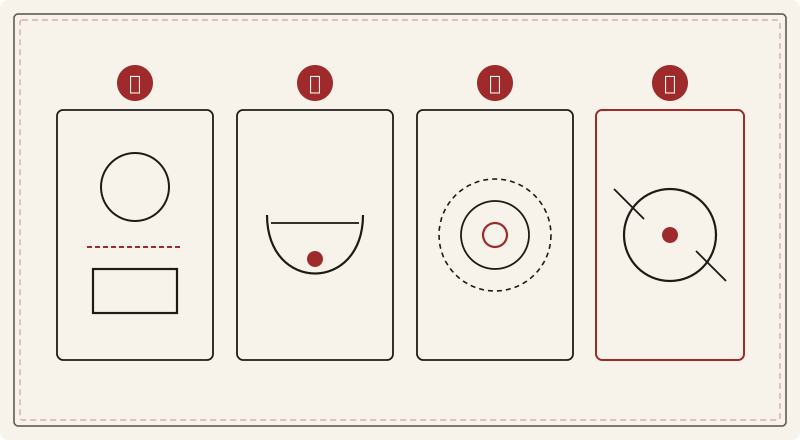
Classical four-panel Wudang diagram illustrating the contemplative progression of the Qingjing Jing from Clear-Turbid polarity to Sending Away Desire, the Three Observations, and Constant Responsiveness Within Stillness
Figure 1 — Contemplative Architecture of the Qingjing Jing (常清静经): ① Polarity of Clear Sky and Settled Earth (Qing Zhe Zhuo Zhi Yuan, Dong Zhe Jing Zhi Ji 清者浊之源,动者静之基); ② Settling the Rippled Mirror (Qian Qi Yu Er Xin Zi Jing, Cheng Qi Xin Er Shen Zi Qing 遣其欲而心自静,澄其心而神自清); ③ The Three Concentric Observations of Form, Mind, and Things (Wai Guan Qi Xing, Nei Guan Qi Xin, Yuan Guan Qi Wu 外观其形、内观其心、远观其物); ④ Living Responsiveness Within Unbroken Stillness (Zhenchang Yingwu, Chang Ying Chang Jing 真常应物,常应常静).

2. "Clarity Is the Source of Turbidity; Movement Is the Foundation of Stillness"

Immediately after describing how the Tao differentiates into clear (Qing 清) and turbid (Zhuo 浊), moving (Dong 动) and still (Jing 静)—with Heaven clear and Earth turbid, Heaven moving in celestial orbits and Earth resting firm below—the scripture delivers two lines that surprise many casual readers:

清者,浊之源;动者,静之基。人能常清静,天地悉皆归。

"The clear is the source of the turbid (qing zhe zhuo zhi yuan 清者浊之源); movement is the foundation of stillness (dong zhe jing zhi ji 动者静之基). When a person can abide in constant clarity and stillness, Heaven and Earth all return within."

Why does a scripture devoted to stillness state that movement is the foundation of stillness and clarity is the source of turbidity? Classical Taoist commentators and Wudang internal-alchemy (Neidan) teachers—reading this passage alongside the Cantong Qi and Wuzhen Pian—highlight two complementary truths:

  • Water and Mud Are Not Two Separate Substances: Turbid mountain runoff is not an alien substance invading pure spring water; it is originally clear water stirred by agitation. You do not purify muddy water by beating it or scooping it out; when agitation ceases, the silt settles by gravity and the native clarity reappears (Cheng Qi Xin Er Shen Zi Qing 澄其心而神自清). Similarly, wandering thoughts are merely the ripples of innate awareness.
  • True Stillness Requires Unobstructed Circulation (Dong Zhe Jing Zhi Ji): Dead, cramped immobility—holding the breath, clenching the jaw, or locking the knees—is stagnation, not Taoist Jing (静). In Wudang Qigong and Daoyin, gentle tendon-opening movement and smooth natural abdominal breathing clear meridian bottlenecks first so that subsequent seated stillness has a living, stable physiological foundation.
Scripture PassageTextual & Psychological MeaningWudang Neigong & Taijiquan Practice Equivalent
夫人神好清,而心扰之 (The Spirit loves clarity, yet the Heart-Mind disturbs it)Original awareness (Yuanshen 元神) is naturally lucid, but discursive calculation (Shishen 识神) stirs constant anxietyOver-thinking techniques mid-form disrupts natural whole-body coordination
人心好静,而欲牵之 (The Heart-Mind loves stillness, yet desire pulls it away)Left unprovoked, the heart settles like a calm lake, until sensory craving hooks attention outwardChasing visual spectacle or forceful collision pulls the center of gravity off its root
遣其欲而心自静,澄其心而神自清 (Send away desire and the heart quiets itself; settle the heart and the spirit clarifies itself)Stillness is not manufactured by force; release the grasping hook and calm returns of itselfSoftening shoulder, chest, and hip tension allows breath to sink without forceful pressing
外观其形,形无其形;内观其心,心无其心;远观其物,物无其物 (Observe outer form, inner mind, and distant things)Contemplative inquiry reveals that neither body, passing thoughts, nor external objects possess a permanent, isolated ego-substanceDissolving rigid self-consciousness in standing meditation and partner Tuishou
真常应物,真常得性;常应常静,常清静矣 (True Constancy responds to things; constantly responding, constantly still)Mature cultivation does not hide from daily duties; like a clear mirror, it reflects every visitor without retaining tracksMoving through complex martial transitions while the inner axis remains utterly unhurried

3. From "Sending Away Desire" to the Three Observations (San Guan 三观)

How does a student actually release mental restlessness without falling into another layer of mental struggle? The Qingjing Jing warns explicitly against suppressing thoughts with brute willpower. If you try to "crush" a distracting thought in meditation, the very effort of crushing becomes a second, louder agitation. Instead, the text introduces the Three Observations (San Guan 三观): observing one's physical form outwardly (Wai guan qi xing 外观其形), observing one's thoughts inwardly (Nei guan qi xin 内观其心), and observing surrounding phenomena at a distance (Yuan guan qi wu 远观其物).

When you quietly watch a restless thought arise during standing or seated practice without feeding it a storyline or fighting it, where is that thought located? It has no solid shape, stays for only a breath, and vanishes like morning mist over Wudang peaks (Xin wu qi xin 心无其心). Recognizing that passing thoughts have no fixed root dissolves attachment naturally (Wu suo zhu 无所住)—not into blankness, because as Chapter 21 of the Tao Te Ching confirms, within quiet receptivity true vital Essence and verifiable balance remain bright and awake.

4. "Constantly Responding, Constantly Still" (Chang Ying Chang Jing) on Wudang Mountain and in Singapore

The crowning teaching of the Qingjing Jing lies in the four characters Chang Ying Chang Jing (常应常静, "constantly responding, yet constantly still"). A beginner often imagines that clarity and stillness exist only inside a silent temple hall at dawn, shattered the moment work, family responsibilities, or busy city traffic begin. Yet the scripture insists that Zhenchang (真常, True Constancy) proves itself precisely in the act of responding to things (Zhenchang yingwu 真常应物).

Across both the UNESCO World Heritage ancient Taoist temples on Wudang Mountain (No. 72 Jianhe 2nd Road, Wudangshan, Hubei, China; UNESCO World Heritage guide) and daily urban classes for students at Lee Wudang International Pte. Ltd. (58A Smith Street (2nd Floor), Singapore 058962; beginner guide), this principle bridges temple contemplation and everyday life:

  • In Solo Taijiquan and Daoyin: Your hands, waist, and feet respond continuously to weight shifts, spiral ward-offs, and corner turns (Chang Ying), while your gaze, breath, and lower Dantian remain as unhurried as deep mountain water (Chang Jing).
  • In Daily Work and Study: Answering messages, handling household duties, and conversing sincerely without letting impatience, vanity, or lingering resentment stick to the mind afterward—just like Chapter 80's peaceful dwelling (An Qi Ju).

Practice Reflection for Students

Before beginning your physical warm-up today, sit or stand upright for three minutes with eyes softly half-closed. Whenever a planning thought or worry appears, do not wrestle with it; simply observe it arrive and pass like a cloud crossing a bronze mirror (Cheng Qi Xin Er Shen Zi Qing), letting your breath settle naturally toward Zhongwan, Qihai, and Guanyuan.

Seeker’s Q&A · Frequently Asked Questions

What does the Qingjing Jing (Scripture of Constant Clarity and Stillness) teach?

The Qingjing Jing is a short Taoist scripture chanted at dawn in the temples of Wudang Mountain; tradition attributes its transmission to Ge Xuan (164–244 CE), while historians date the received text to the Tang dynasty. It teaches that the spirit is naturally clear and the heart naturally still, and that desire is what disturbs them: “send away desire and the heart quiets itself; settle the heart and the spirit clarifies itself”. Its method is to observe body, thoughts and things rather than fight them, and its aim is to stay still while responding to daily life (常应常静).


How can I apply this in practice?

Before beginning your physical warm-up today, sit or stand upright for three minutes with eyes softly half-closed. Whenever a planning thought or worry appears, do not wrestle with it; simply observe it arrive and pass like a cloud crossing a bronze mirror (Cheng Qi Xin Er Shen Zi Qing), letting your breath settle naturally toward Zhongwan, Qihai, and Guanyuan.
